
Artificial Intelligence
AI Agents for business: what they are and how they work
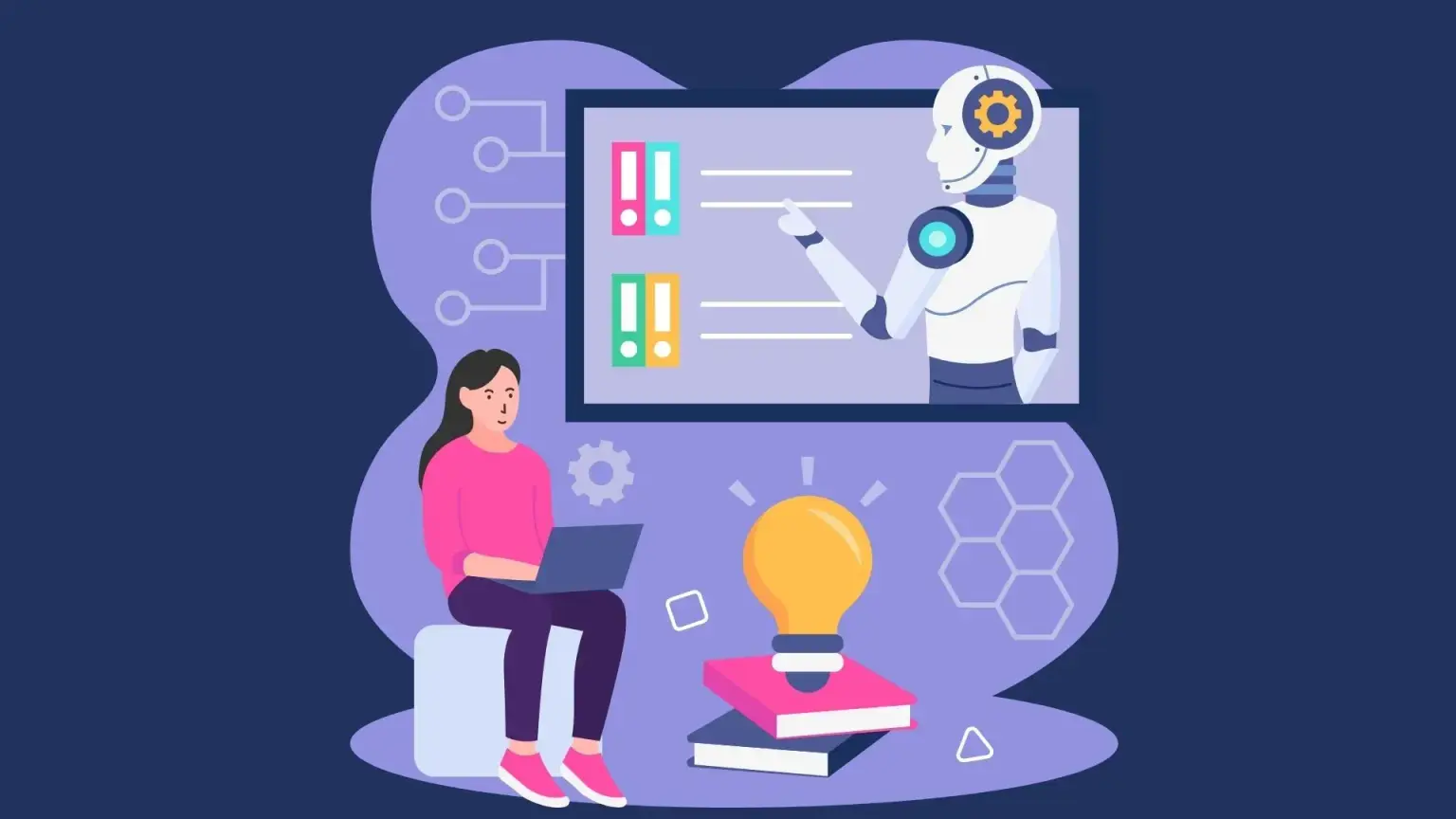
AI agents for business are software systems powered by large language models (LLMs) that can understand natural-language requests, reason about a goal and complete it autonomously, coordinating multiple tools and enterprise systems. Unlike an assistant that simply replies, an AI agent acts: it updates a CRM, routes a support request, qualifies a lead or kicks off an internal process without needing step-by-step human commands.
Sam Altman, CEO of OpenAI, anticipated it: "2025 will be the year of AI Agents." The direction is clear, yet for many organizations a practical question remains: what really changes when you bring AI agents into business processes? In this guide we look at what they are, how they work, the benefits they deliver and how to adopt them safely.
What are AI agents for business
An AI agent is an artificial intelligence system that combines the language capability of a large language model with planning logic and access to external tools (APIs, databases, business applications). This combination lets it break a goal down into multiple steps, decide which action to take at each step and check the outcome until the task is complete.
In a business context, this means moving from an AI that "suggests" to an AI that "executes". An agent can read a customer email, retrieve the order history, work out a solution and reply autonomously, or hand the conversation over to a human operator when the situation calls for it. It is a paradigm shift that concerns large enterprises and SMEs alike.
AI agents vs chatbots: what is the difference?
The main difference is that a traditional chatbot replies, while an AI agent acts. A rule-based chatbot follows predefined flows (decision trees) and works well only as long as the conversation stays on the expected track. An AI agent, by contrast, interprets context, chooses which tools to use and handles requests that change direction mid-dialogue.
In short, the most relevant differences are:
- Context understanding: the chatbot recognizes keywords, the agent understands intent and nuance.
- Operational autonomy: the chatbot answers, the agent completes multi-step tasks.
- Use of tools: the agent connects to external systems (CRM, ERP, knowledge bases) to act on real data.
- Adaptability: the agent handles exceptions and unplanned paths, reducing the classic chatbot dead ends.
This evolution is also enabled by techniques such as retrieval with RAG systems, which let the agent answer based on the company's own documents and specific knowledge.
How an AI agent works: perception, reasoning and action
The way an AI agent works can be described as a continuous loop with three phases. In the perception phase the agent receives an input (a message, an event, a piece of data) and reconstructs its meaning and context. In the reasoning phase it builds a plan: it decides what information is needed, which tools to use and in what order to proceed. In the action phase it actually performs the operations, for example querying a database or updating a ticket, and evaluates the result to decide the next step.
What makes all of this effective is memory: a well-designed agent retains the context of the conversation and of previous interactions, so it does not start from scratch with every request. When several agents collaborate on a shared goal, we talk about multi-agent systems, where each agent is specialized in a task and the results are orchestrated toward the final outcome.
What benefits do AI agents bring to companies?
AI agents cut response times, lower operating costs and free people from repetitive tasks, letting them focus on higher-value work. The advantage is not only automation, but the ability to scale a quality service without scaling headcount in proportion.
The most concrete benefits for an organization are:
- Continuous availability: agents operate 24/7 with no drop in quality.
- Lower costs: standardizable tasks are handled autonomously, at a very low marginal cost.
- Consistent answers: the agent always applies the same rules and sources, reducing human error.
- Faster processing: cases and requests are handled in real time, improving the customer experience.
- People first: staff focus on complex cases and relationships, where the human contribution makes the difference.
The main use cases of AI agents for business
AI agents apply to almost every business function. Among the most mature use cases:
- Customer experience and support: handling requests, multilingual support and contact qualification, as we describe in our piece on AI agents for customer experience.
- Human resources: onboarding new hires and answering recurring questions, as in our HR onboarding project.
- Sales and marketing: lead qualification, automated follow-ups and support for the sales network.
- Internal processes: document routing, compliance checks and automation of repetitive cross-department flows.
The common thread is always the same: the agent does not replace the process, it makes it faster and less burdensome for people.
AI agents and security: what to keep under control
Giving a system the ability to act requires attention to governance. The areas to oversee involve data protection, controlling access to the tools the agent can use and the traceability of the actions it performs. It is good practice to keep a human-in-the-loop mechanism for the most sensitive decisions and to set clear boundaries on what the agent can and cannot do.
We explored risks and countermeasures in our dedicated article on artificial intelligence and security: addressing the topic from the design stage is the best way to adopt agents with confidence.
How to adopt AI agents in your company
Effective adoption starts from a measurable goal, not from the technology. It helps to pick a high-volume, low-complexity process, define the expected results and start with a pilot. No-code platforms for building agents, like the ones Athics works on, make it possible to go from idea to go-live in a few weeks, integrating the agent with the systems already in use and refining it based on real usage data.
The typical path involves four steps: choosing the use case, integrating with company data sources, testing with real users and going to production with continuous performance monitoring.
Market figures and outlook
Interest in agentic AI is confirmed by market data. According to Gartner, by 2028 around 33% of enterprise software applications will include agentic AI, up from less than 1% in 2024. On the economic side, McKinsey estimates that generative AI could generate between $2.6 and $4.4 trillion in annual value globally, much of it precisely in customer support, sales, marketing and software development functions.
These figures explain why AI agents for business have moved so quickly from experimentation to real-world adoption.
The Athics experience
Athics dedicated a webinar to the topic, "The AI Agents Revolution", with contributions from experts in innovation, artificial intelligence and cybersecurity: Riccardo Petricca (Innovation Manager and Professor of Artificial Intelligence at Pontificia Università Antonianum), Luca Sambucci (board member of the AIxIA Industrial Committee, cybersecurity expert) and Pierluigi Sandonnini (journalist, Senior Web Editor at Network Digital360). The session covered the differences between agents and chatbots, business use cases, security aspects and the organizational change needed to integrate them effectively.
If you want to understand how AI agents can create concrete value in your processes, talk to our team: we will help you identify the right use case and bring it into production.
Frequently asked questions
What is an AI agent for business?
An AI agent for business is software powered by large language models that can understand natural-language requests, make decisions and complete tasks autonomously, such as handling customer support, qualifying leads or automating internal processes.
What is the difference between an AI agent and a traditional chatbot?
A traditional chatbot follows predefined flows and answers narrow questions, while an AI agent reasons about context, uses external tools and carries out complex multi-step tasks, adapting to the conversation as it unfolds.
What benefits do AI agents bring to companies?
AI agents cut response times, lower operating costs and free people from repetitive work so they can focus on higher-value tasks. They run 24/7 and scale without adding headcount.
Related articles

Conversational AI in customer service: less friction, more value
Conversational AI in customer service: use cases, Gartner data and the Claxon.ai voice agent for automotive from the Athics webinar with Add Value and Adawen.

AI Digital Evolution: the future of business driven by data
Athics and DWIT explain how to implement an AI Digital Evolution strategy supported by Conversational AI: data, people and technology as growth drivers.

AI in the Food Industry: a new webinar Athics
A new Athics webinar explores the impact of AI in the food industry and presents the use case of Centrale del Latte di Torino.