
Artificial Intelligence
A new RAG system in Crafter.ai platform
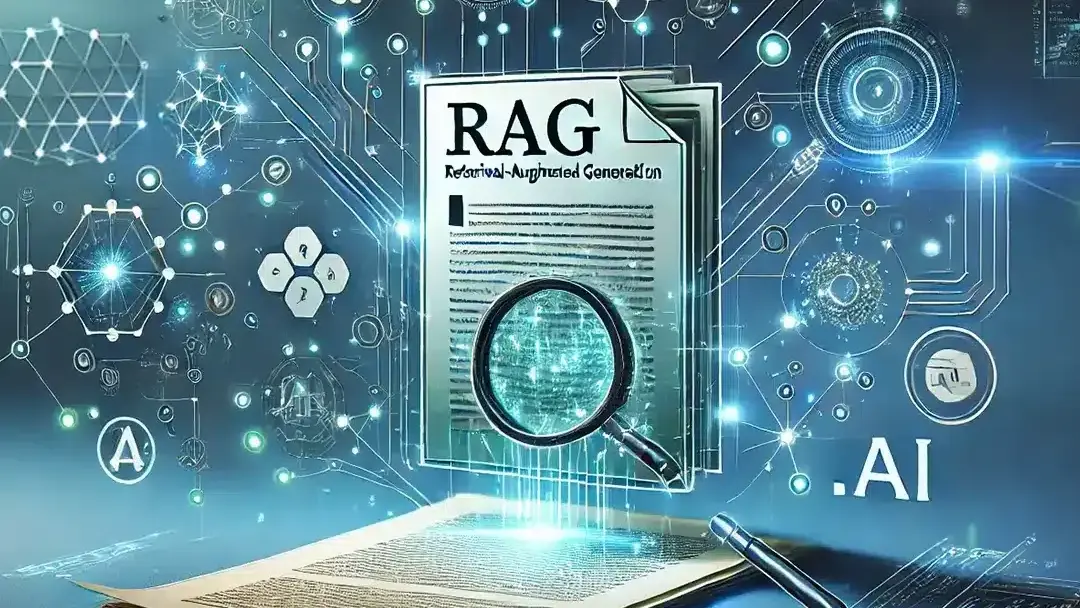
A RAG system (Retrieval-Augmented Generation) is an artificial intelligence architecture that, before generating an answer, retrieves the most relevant passages from an organization's documents and feeds them to a large language model as context. In practice it combines two capabilities: retrieval, finding the right information inside a knowledge base, and generation, producing a natural-language answer. The result is an AI that does not reply only with what it "memorized" during training, but that grounds itself in the company's real and specific data.
The Crafter.ai team brought this approach into its platform with a new RAG system for creating AI agents starting from document uploads. The "Document Manager" tool is designed to optimize the integration of documents within the knowledge base of AI agents and favour users' complete autonomous management of the process. In this guide we look at what a RAG system is, how it works, why it reduces hallucinations and how it translates concretely into the Athics platform.
What a RAG system is and why it matters
A RAG system exists to solve a specific limitation of large language models: however powerful they are, these models only know what was present in their training data and have no native access to a single company's internal documents, updated procedures or price lists. The technique was formalized in 2020 in the paper "Retrieval-Augmented Generation for Knowledge-Intensive NLP Tasks" by Lewis and colleagues, published on arXiv, and since then it has become one of the most widespread approaches for building reliable conversational AI applications.
The value of RAG lies in a shift of perspective. Instead of asking the model to "know everything", you ask it to reason from the right information, retrieved on the spot from the knowledge base. It is the difference between a student answering from memory and one who has the manuals open at the correct page: the latter is almost always more accurate, more up to date and easier to verify. For a business this means harnessing the linguistic power of AI without giving up control over the content that feeds the answers.
How a RAG system works: retrieval, embedding and generation
The way a RAG system works can be described as a multi-step journey that starts from a user question and arrives at an answer grounded in documents. It all begins with preparing the knowledge base: documents are split into manageable chunks and turned into embeddings, numerical representations that capture the meaning of the text. These vectors are stored in a specialized database, so that semantically similar content ends up close together in the mathematical space.
When the user asks a question, their request is also converted into an embedding and compared with the stored ones. The system then identifies the most relevant passages, regardless of whether they use exactly the same words as the question: semantic search is what makes the difference compared to a simple keyword search. The main phases of the process are:
- Ingestion and indexing: documents are uploaded, chunked and turned into embeddings stored in a vector database.
- Retrieval: given the user's question, the system fetches the most relevant text passages from the knowledge base.
- Augmentation: the retrieved passages are combined with the original question and passed to the large language model as context.
- Generation: the model produces a natural-language answer based on the retrieved content, not only on its own memory.
This loop repeats with every interaction and updates whenever the document base changes. Adding a new procedure or replacing a price list does not require retraining the model: it is enough to update the documents in the knowledge base, and the RAG system will immediately start retrieving the new information. It is precisely this agility that makes the architecture suitable for dynamic contexts, where knowledge evolves continuously.
Why RAG reduces hallucinations and grounds answers in company data
One of the most discussed problems with large language models is the so-called hallucination: the tendency to generate plausible but incorrect answers, especially when the model lacks the requested information. In a business context, where a wrong answer about a contract clause or a procedure can have concrete consequences, this risk is not acceptable. RAG tackles the problem at its root, because it ties the answer to passages that actually exist in the uploaded documents.
When the model builds the answer from retrieved and verifiable content, the likelihood of "making things up" drops significantly. The answer becomes grounded in the source, up to date and potentially traceable: it is possible to go back to the documents it was derived from. This brings three benefits that businesses notice immediately: greater accuracy, greater control over content and greater trust from end users, who receive information consistent with the organization's official knowledge.
It is fair to say that RAG does not eliminate errors entirely: the quality of the answers depends on the quality of the documents and on how good the retrieval is. If the knowledge base contains outdated or contradictory information, even the best RAG system will surface it. That is why content curation remains the company's responsibility, and it is also why a good system must make it simple to update and govern the document base. This same logic underpins AI agents for business, which use information retrieval to act reliably on real data.
What are the use cases of a RAG system
The use cases of a RAG system multiply in every situation where you need a precise answer based on specific documentation. This is not a niche technology: wherever there is a broad, heterogeneous and evolving knowledge base, RAG makes it possible to query it in natural language and get targeted answers. The common thread is always the same: turning static archives into immediately accessible knowledge.
Among the most mature applications we find:
- Customer support: the agent answers questions about products, terms and procedures by drawing directly from company manuals and FAQs, as we explore in our article on AI agents for customer experience.
- IT help desk and internal support: operators and users get fast answers based on the technical knowledge base, reducing ticket resolution times, as in the AI for IT help desk case.
- Knowledge management: employees query policies, contracts and internal documentation without manually searching through dozens of files.
- Sales and onboarding: product sheets, price lists and training materials become queryable in real time, speeding up the ramp-up of new sales reps and new hires.
In all these scenarios the RAG system optimally handles heterogeneous questions spread across different documents, integrating the information into a single coherent answer. It is a change that concerns large enterprises and SMEs alike, because it lowers the barrier between people and the knowledge already present in the company.
The RAG system inside Athics' Crafter.ai
In Crafter.ai the RAG system takes the concrete form of the "Document Manager" tool, accessible within the Teach phase of the platform. With a simple click on the dedicated button, users can upload their files (pdf, doc, docx, csv and JSON) quickly and effectively, integrating them into the AI agents' knowledge base. The functionality is based on latest-generation technologies such as RAG (Retrieval-Augmented Generation) and LLM (Large Language Models), and everything happens in a no-code way, with no programming skills required.
Thanks to this combination, AI agents can retrieve and understand complex information contained in documents and generate precise, personalized answers during conversations with users, using the uploaded content as a reference source. The resulting benefits are concrete and immediate:
- Autonomous management of RAG technology: users configure and update the process of integrating and using information by AI agents in complete autonomy.
- Reduction of implementation times: building the knowledge base becomes extremely fast and allows optimal management of heterogeneous questions contained in different documents.
- Advanced personalization: AI agents' answers become more targeted, based on specific content provided by users.
- More accurate answers: AI agents draw directly from the uploaded documents, improving the relevance and quality of interactions.
The RAG system represents a real turning point for knowledge management within conversational AI platforms. By integrating dynamic and complex information with precision, this technology makes it possible to overcome the limitations of traditional models and guarantee a superior user experience. In addition, the RAG-based architecture offers scalability and robustness, making it suitable for businesses of any size and industry. Addressing governance aspects from the design stage, as we discuss in our article on artificial intelligence and security, is the best way to adopt these solutions with confidence.
With this feature, Athics' Crafter.ai platform confirms its position at the forefront in making conversational AI an increasingly accurate and simple tool for optimizing interactions with users. If you want to understand how a RAG system can unlock the knowledge already present in your organization, talk to our team: we will help you identify the right use case and bring it into production.
Related articles
Frequently asked questions
What is a RAG system?
A RAG system (Retrieval-Augmented Generation) is an architecture that, before generating an answer with a large language model, retrieves the most relevant passages from a company's documents and feeds them to the model as context. This way the answer is grounded in real sources, not only in the model's internal knowledge.
Why does RAG reduce AI hallucinations?
RAG reduces hallucinations because it forces the model to rely on verifiable content retrieved from the knowledge base instead of making information up. When the answer is built from real documents, it becomes more accurate, up to date and traceable to its source.
What is the difference between RAG and fine-tuning a model?
Fine-tuning retrains the model by changing its weights, while RAG leaves the model unchanged and supplies external information at query time. RAG is faster to update: you simply upload or replace documents, with no retraining required.
How does the Crafter.ai RAG system work?
In Crafter.ai the RAG system is used through the Document Manager tool in the Teach phase: you upload files (pdf, doc, docx, csv and JSON) into the knowledge base and the AI agent retrieves them to generate answers based on company content, in a no-code way and with full autonomy.
Related articles

Conversational AI in customer service: less friction, more value
Conversational AI in customer service: use cases, Gartner data and the Claxon.ai voice agent for automotive from the Athics webinar with Add Value and Adawen.

AI Digital Evolution: the future of business driven by data
Athics and DWIT explain how to implement an AI Digital Evolution strategy supported by Conversational AI: data, people and technology as growth drivers.

AI in the Food Industry: a new webinar Athics
A new Athics webinar explores the impact of AI in the food industry and presents the use case of Centrale del Latte di Torino.